Registan Square
Photo Credit: Photo by Hans-Jürgen Weinhardt on Unsplash
Registan Square
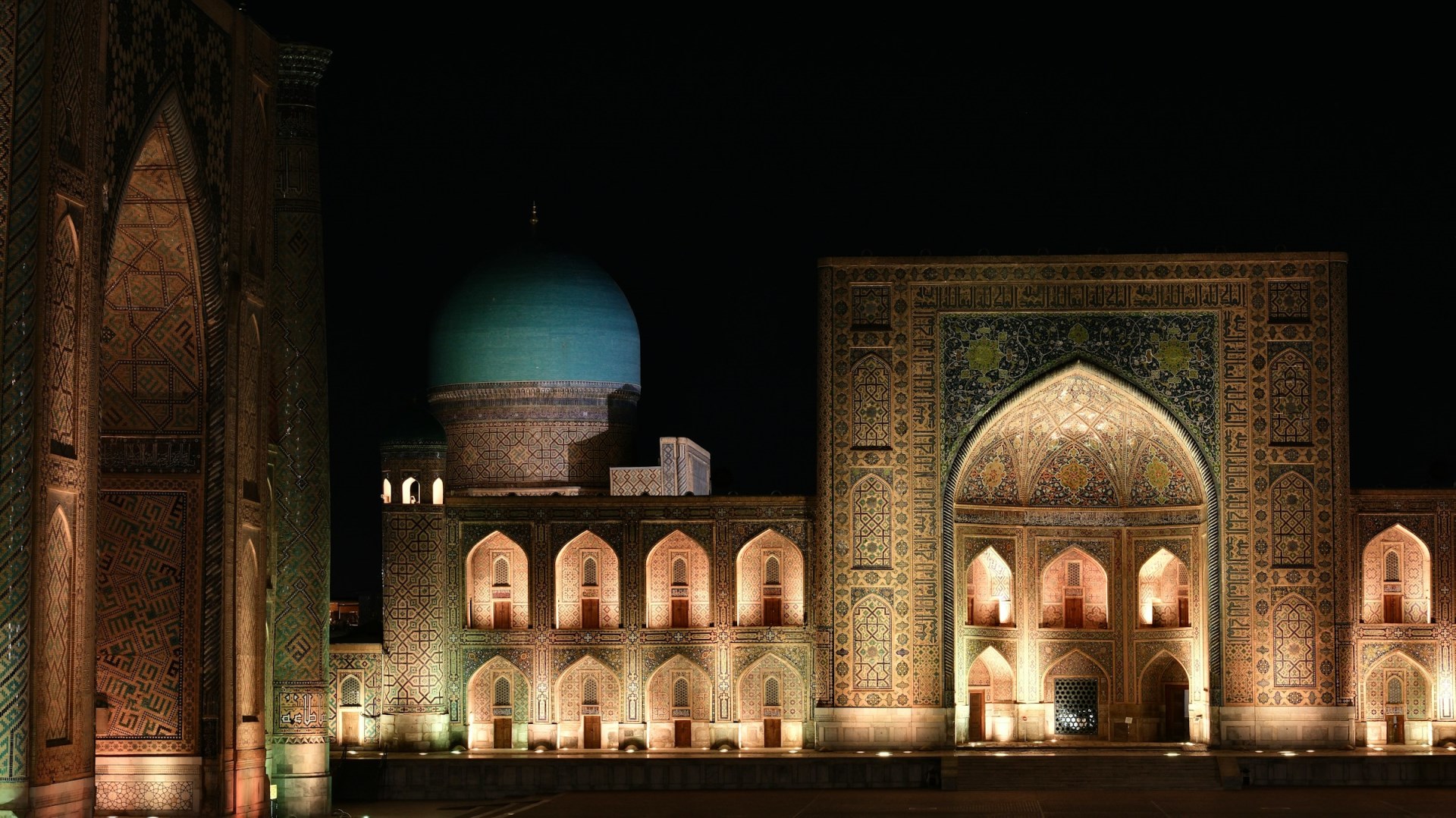
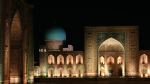
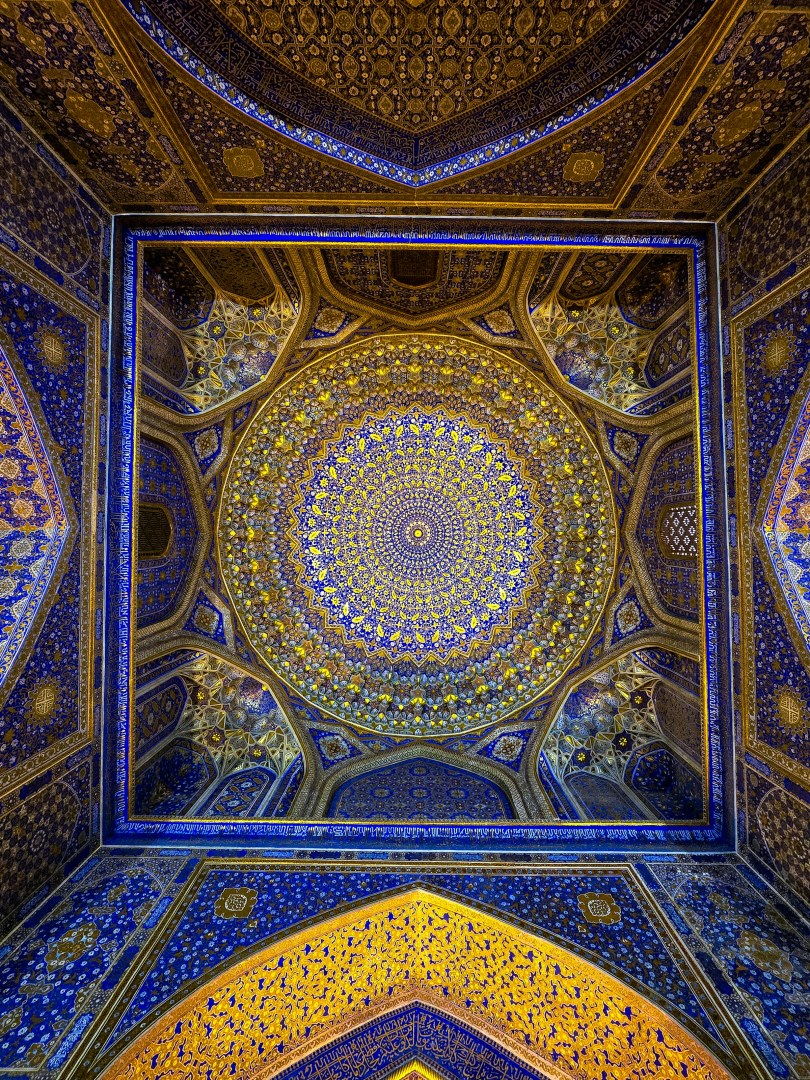
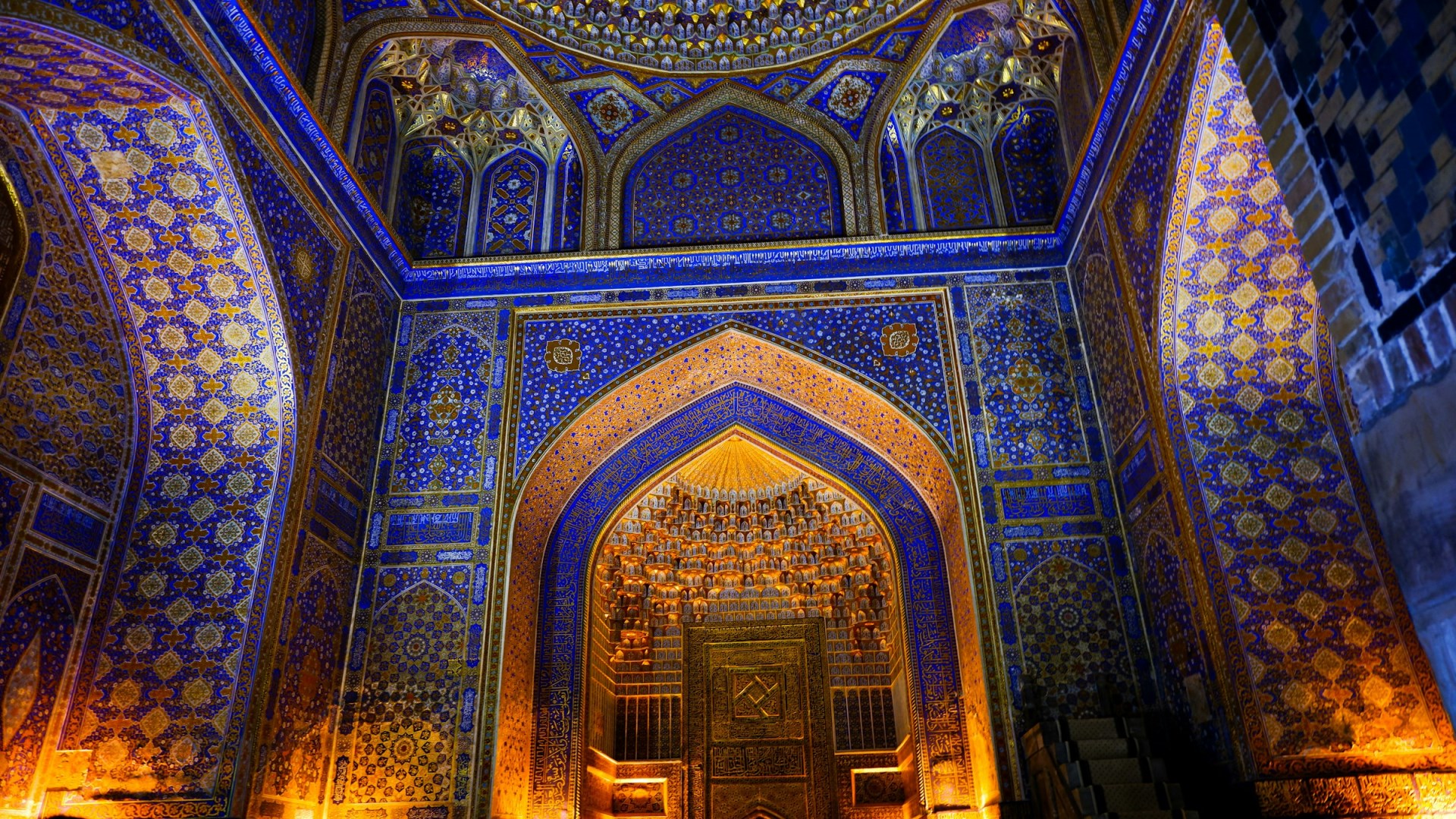
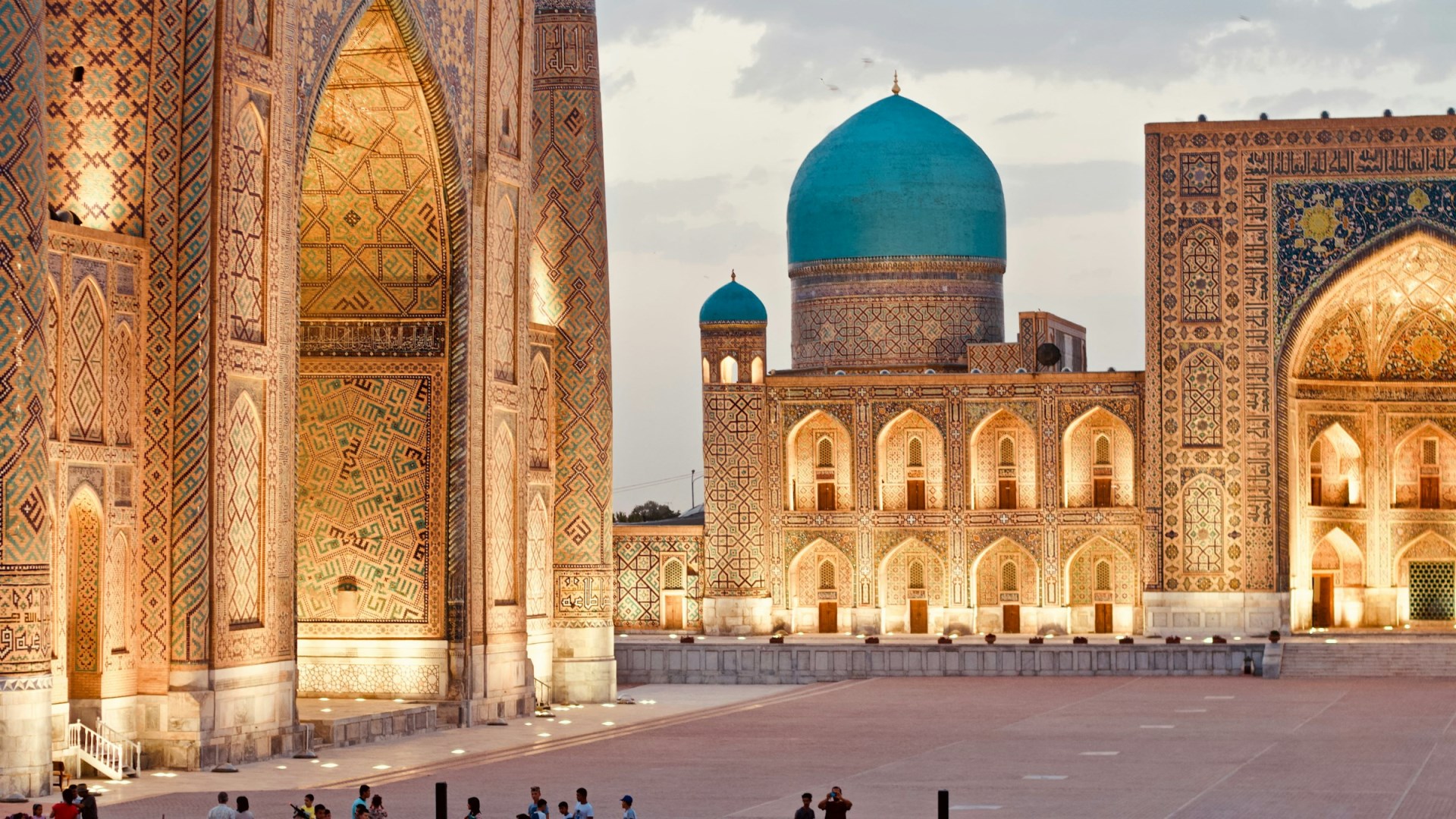
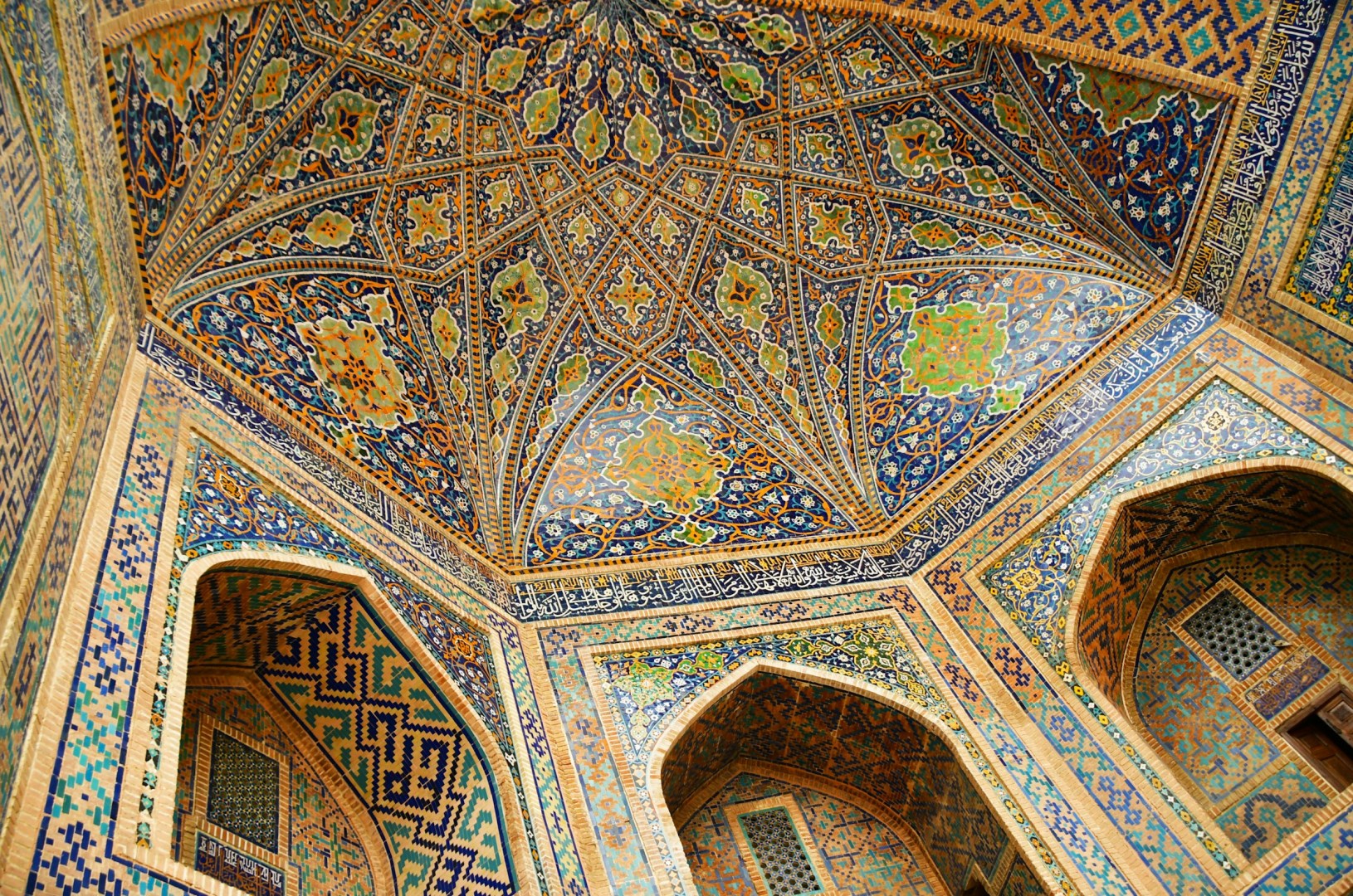
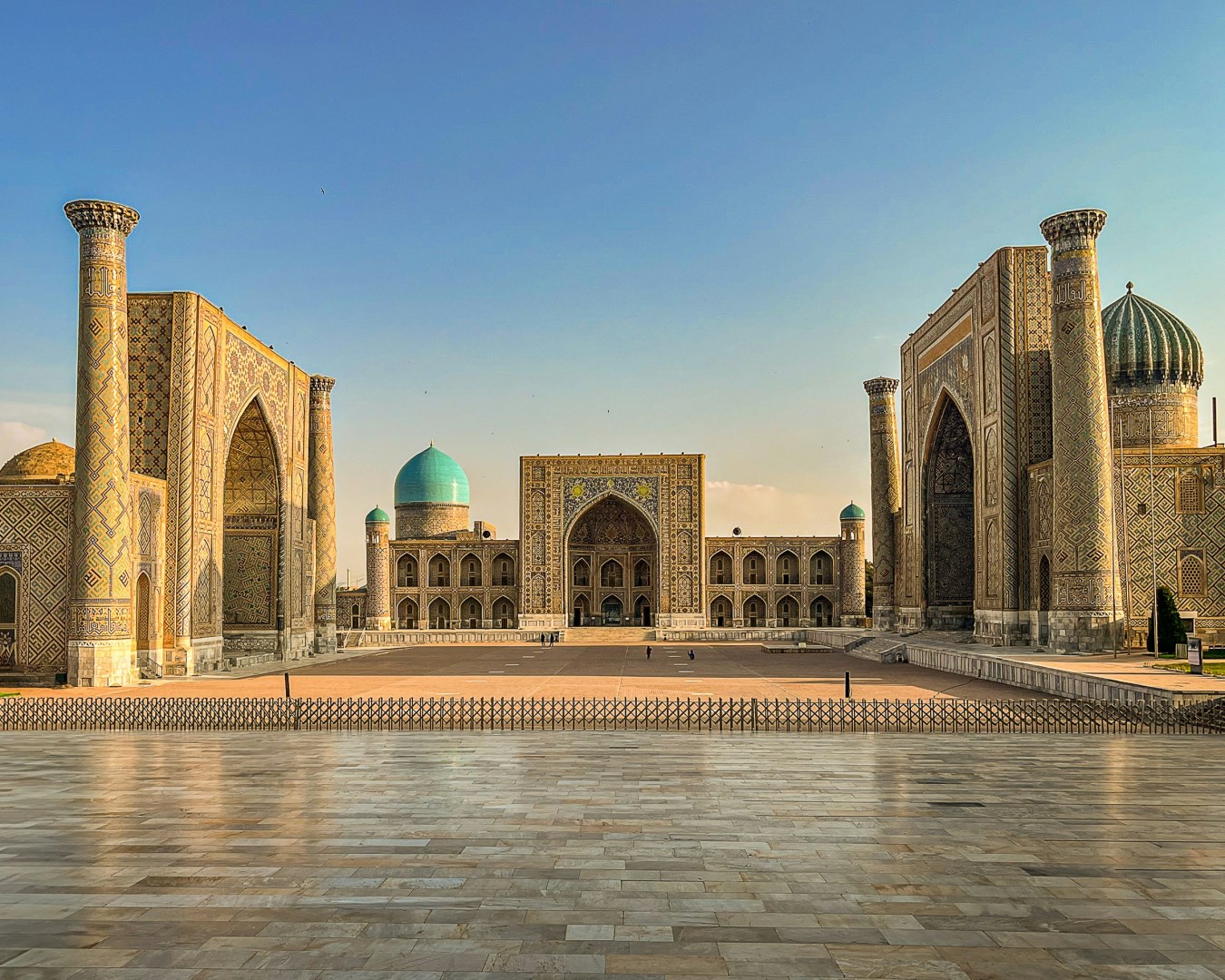
Registan Square is the architectural centerpiece of Samarkand, Uzbekistan, and one of the most important ensembles of Islamic architecture in Central Asia. The vast public square is framed by three monumental madrasahs: Ulugh Beg Madrasah, Sher-Dor Madrasah, and Tilya-Kori Madrasah. Their façades are covered with intricate geometric patterns, calligraphy, mosaics, and richly colored tilework, while the great arched portals, or pishtaqs, create a unified monumental composition. Registan served as a major public and commercial space in Samarkand and remains closely associated with the city’s role as a center of scholarship, trade, and culture along the historic Silk Roads.
Imam Bukhari Mosque
Photo Credit: Photo by Misbah on Unsplash
Imam Bukhari Mosque
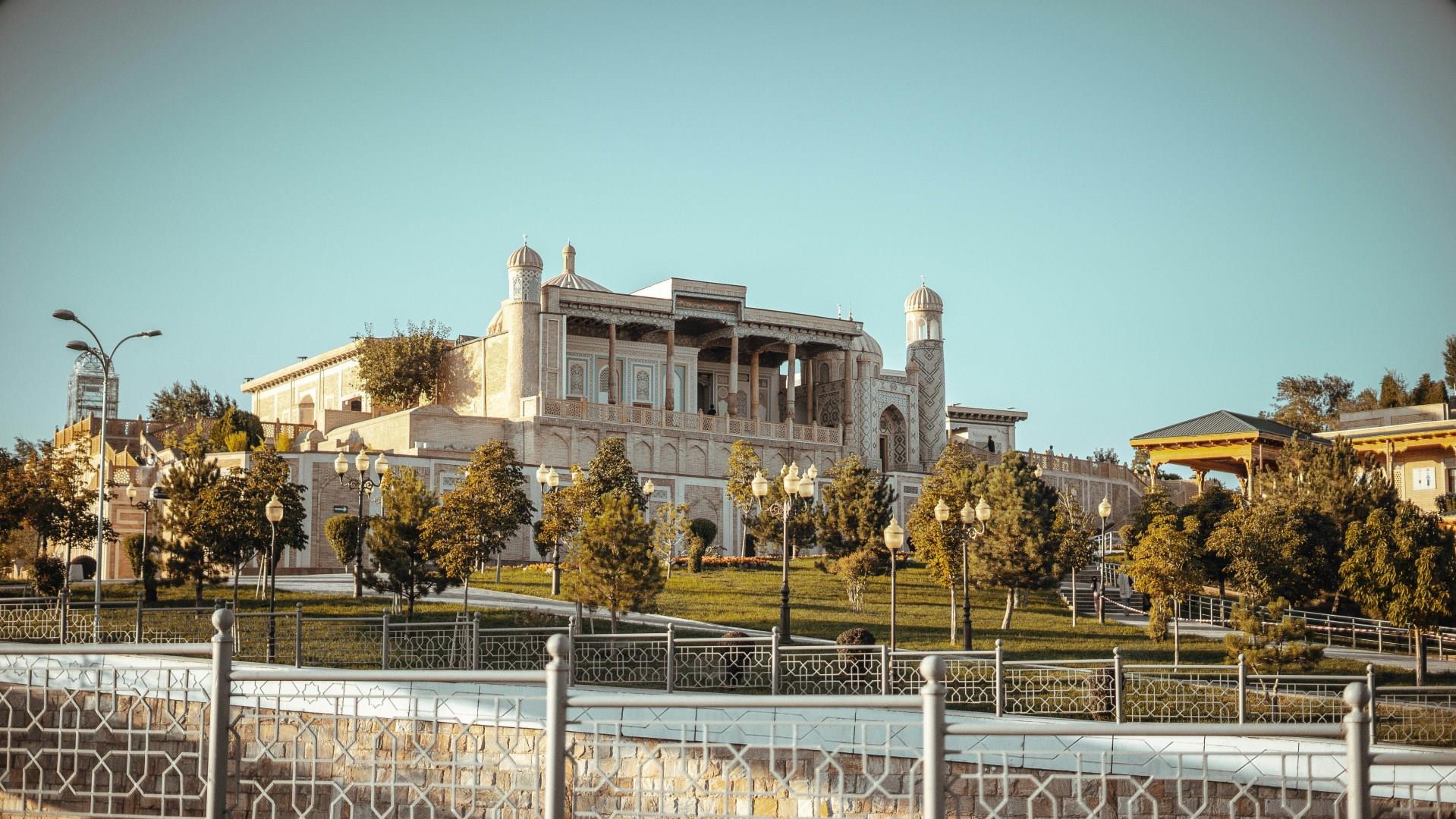
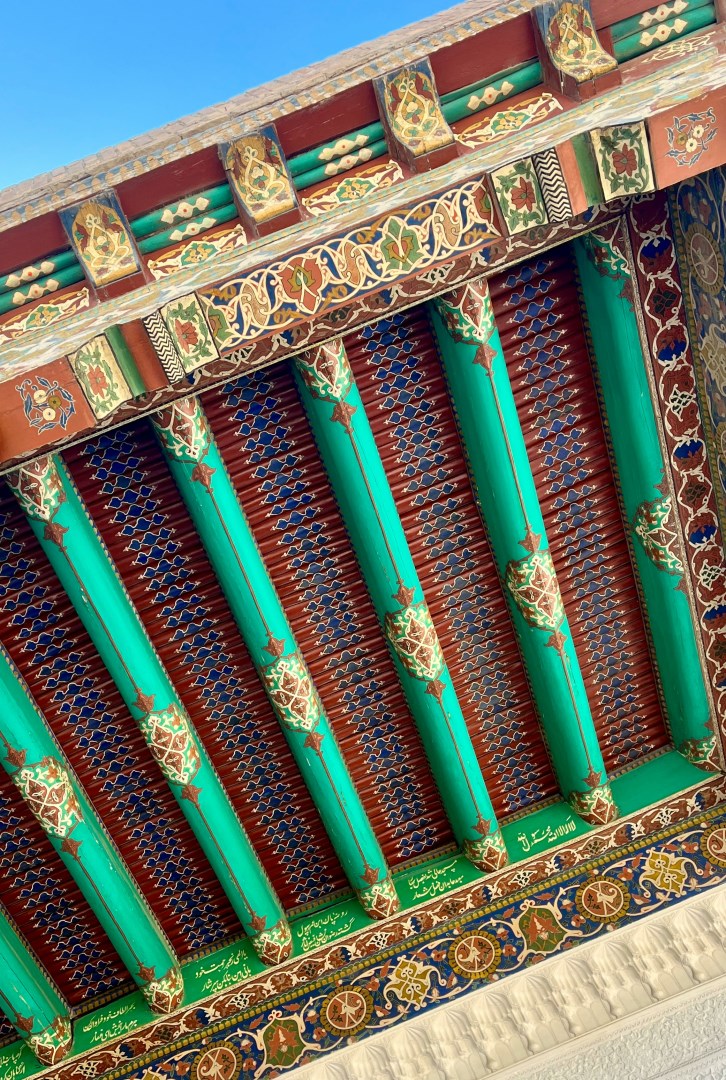
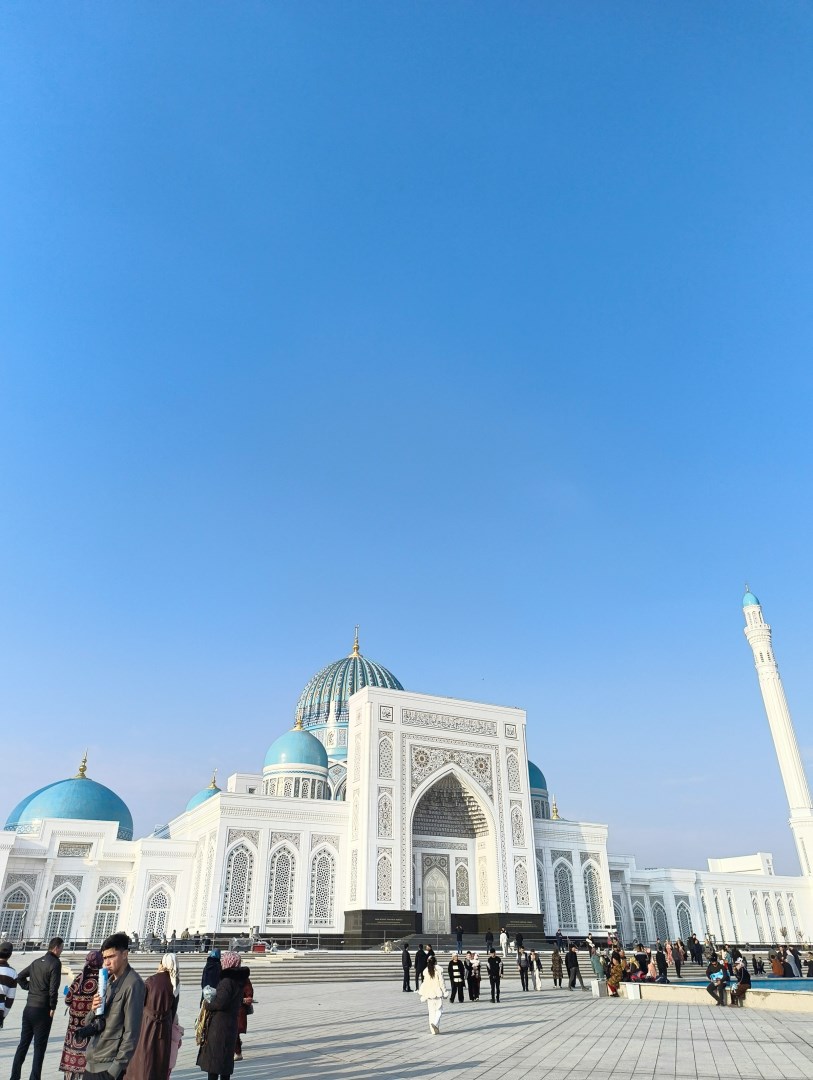
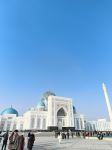
Imam Bukhari Mosque forms part of the Imam al-Bukhari Memorial Complex in Hartang, about 25 kilometers from Samarkand, where the renowned Islamic scholar Imam Muhammad ibn Ismail al-Bukhari is buried. The recently reconstructed mosque is part of a large religious and educational complex that also includes the scholar’s mausoleum, a museum, library, and the Darus Hadith educational center. The mosque can accommodate around 10,000 worshippers and features a large central dome, fourteen blue domes across the wider complex, four tall minarets, and a traditional Uzbek aivan supported by 154 carved columns. The complex combines contemporary construction with Central Asian architectural forms and serves as an important pilgrimage destination.
Shah-i-Zinda
Photo Credit: Photo by Tim Broadbent on Unsplash
Shah-i-Zinda
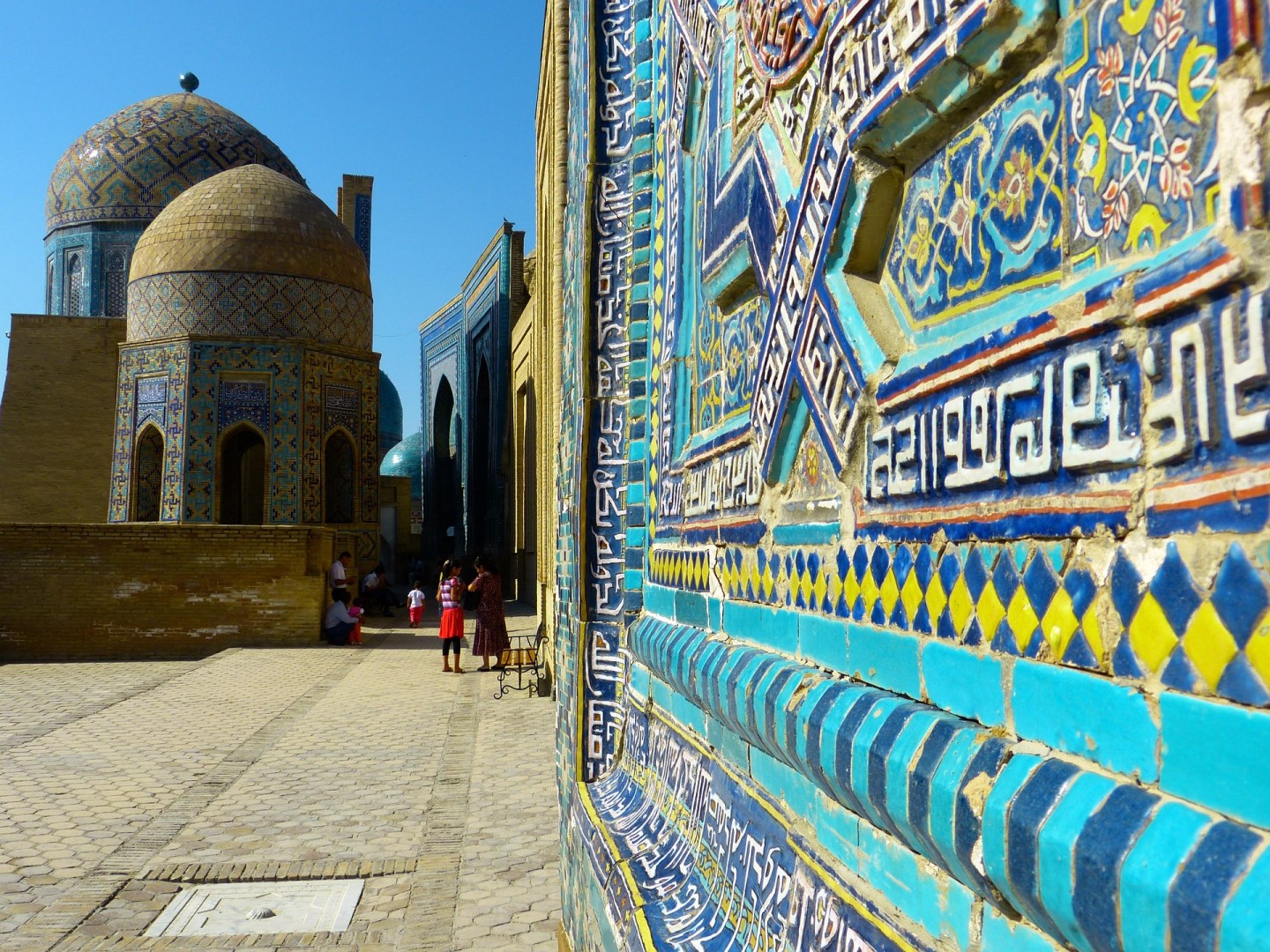
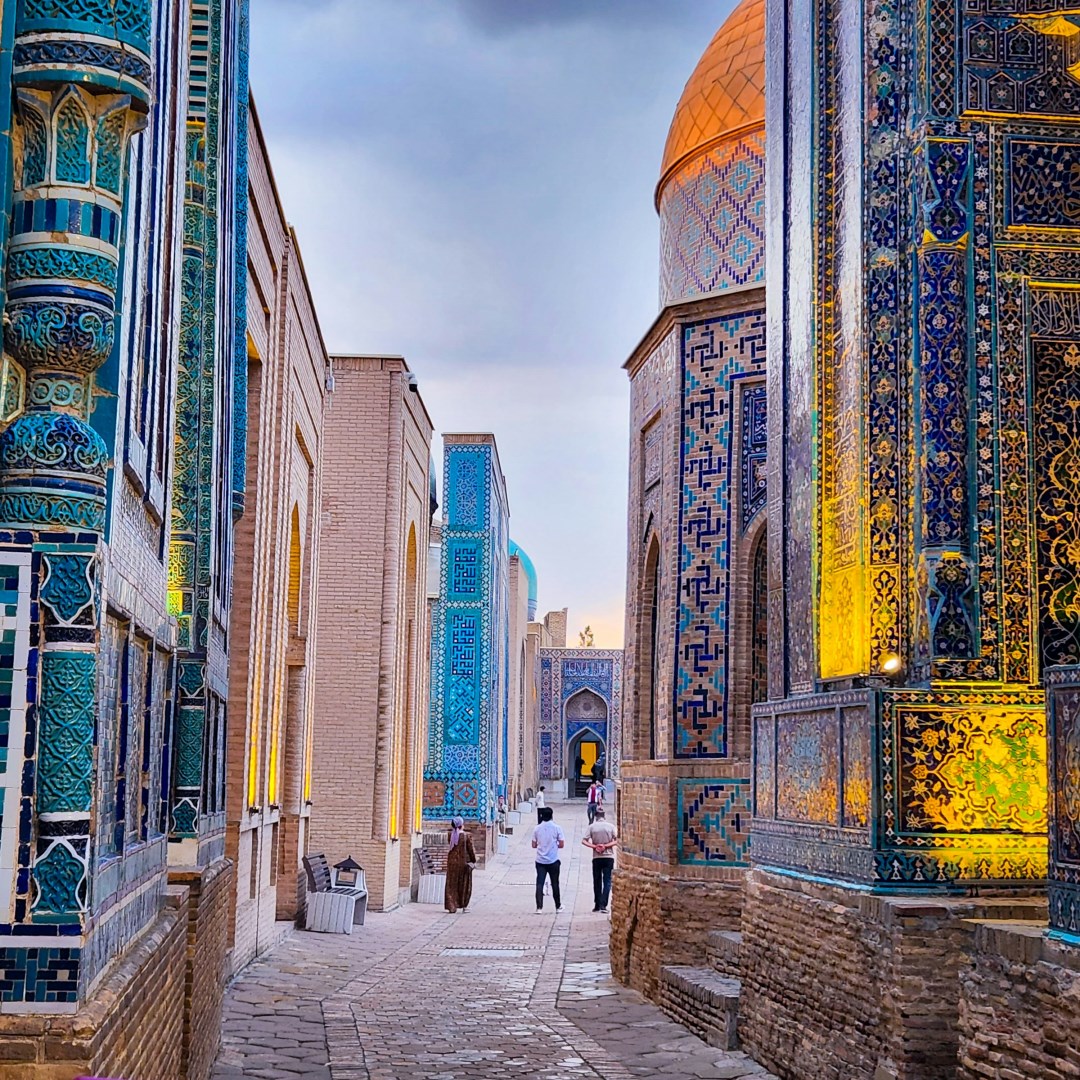
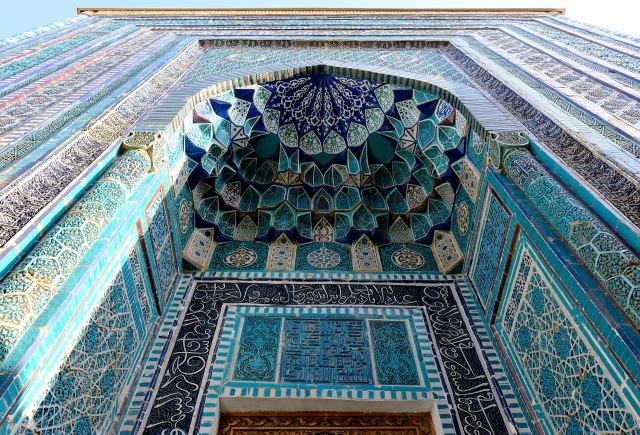
Shah-i-Zinda, also known as Shakhi-Zinda or the “Living King,” is a historic necropolis on the southeastern edge of the ancient Afrasiab settlement in Samarkand. The sacred complex is associated with Qusam ibn Abbas, traditionally identified as a cousin of the Prophet Muhammad, and has long been an important pilgrimage site. A sequence of mausoleums, mosques, and other religious buildings lines a narrow passageway leading uphill, creating one of Samarkand’s most distinctive architectural ensembles. Their façades feature elaborate turquoise, blue, and patterned ceramic tilework, with carved terracotta and intricate geometric decoration. The complex forms part of Samarkand’s UNESCO World Heritage property and represents several layers of Central Asian Islamic architecture.
Gur-e-Amir mausoleum
Photo Credit: Photo by Tim Broadbent on Unsplash
Gur-e-Amir mausoleum
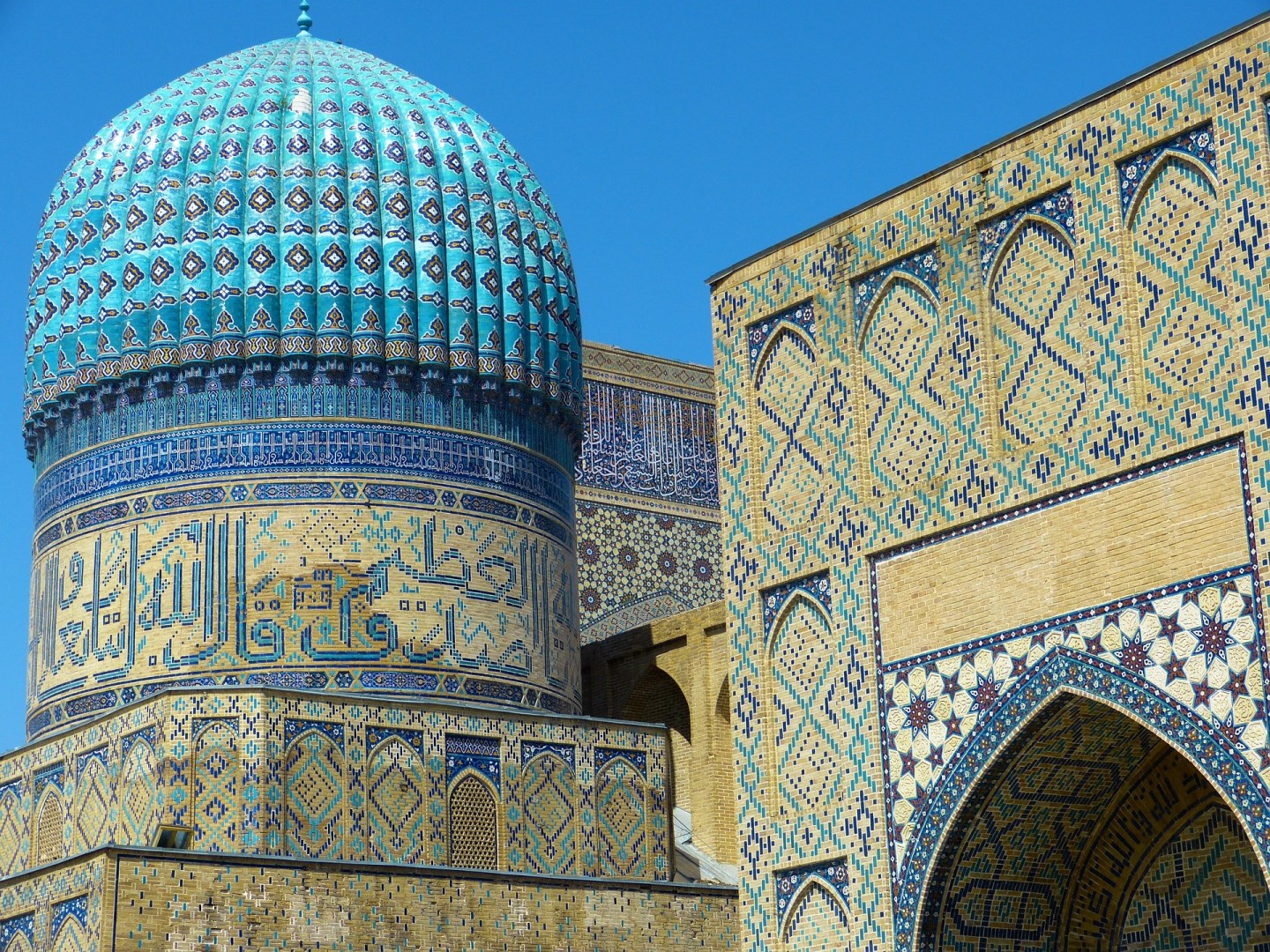
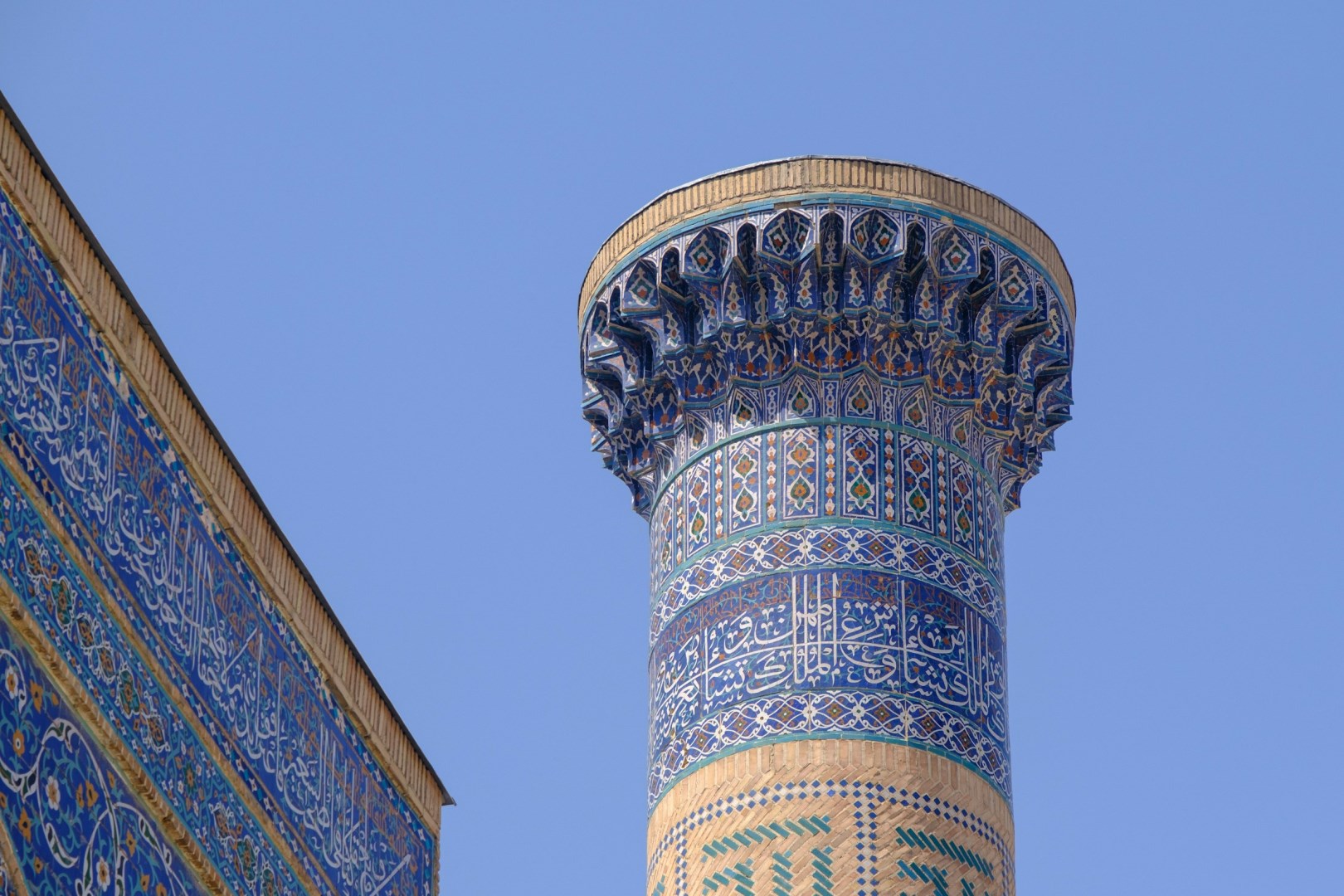
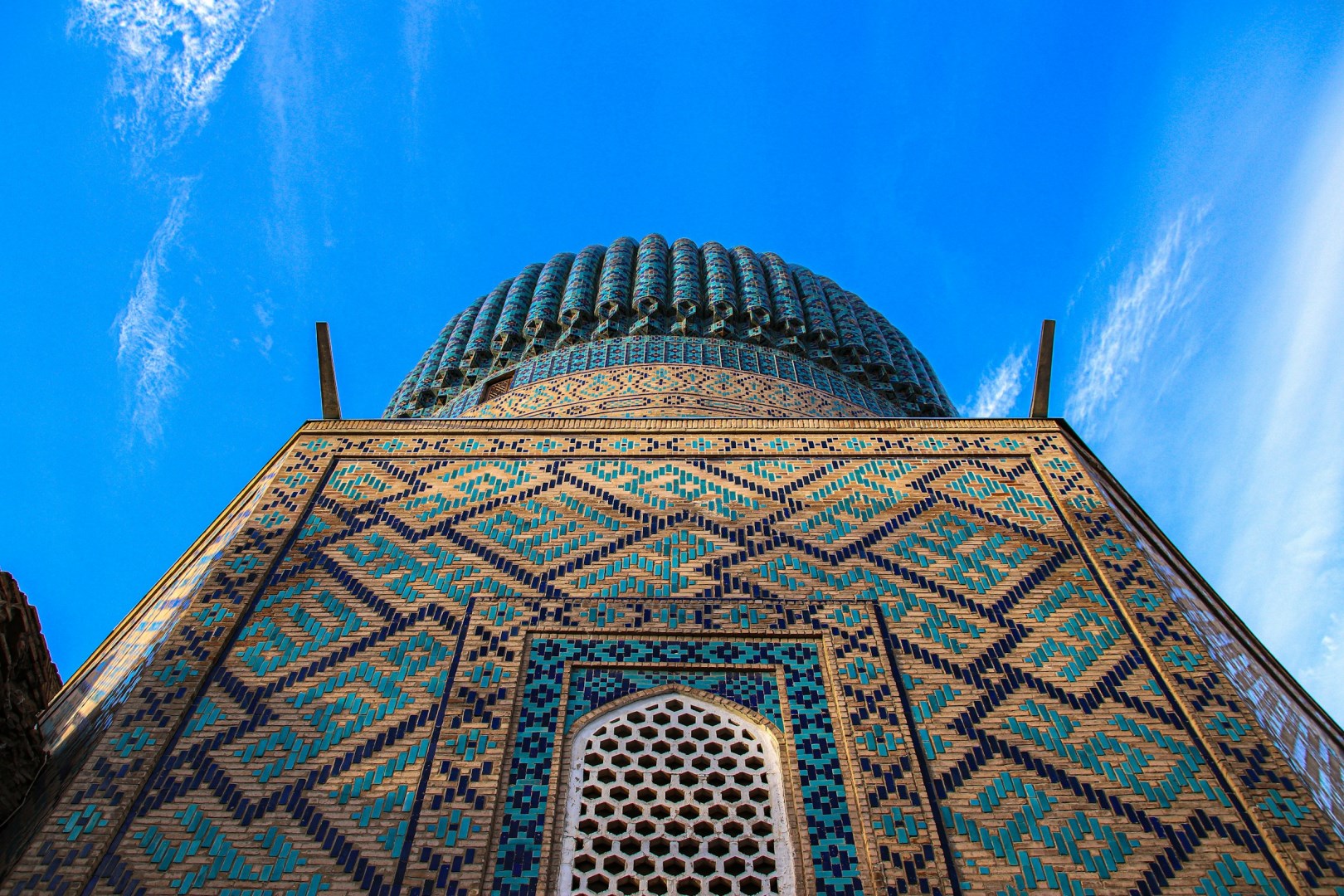
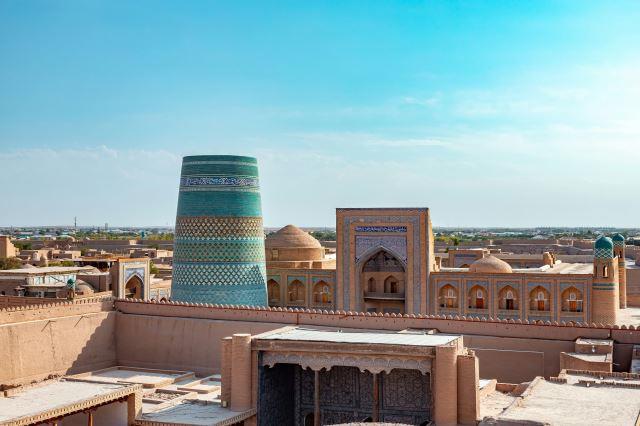
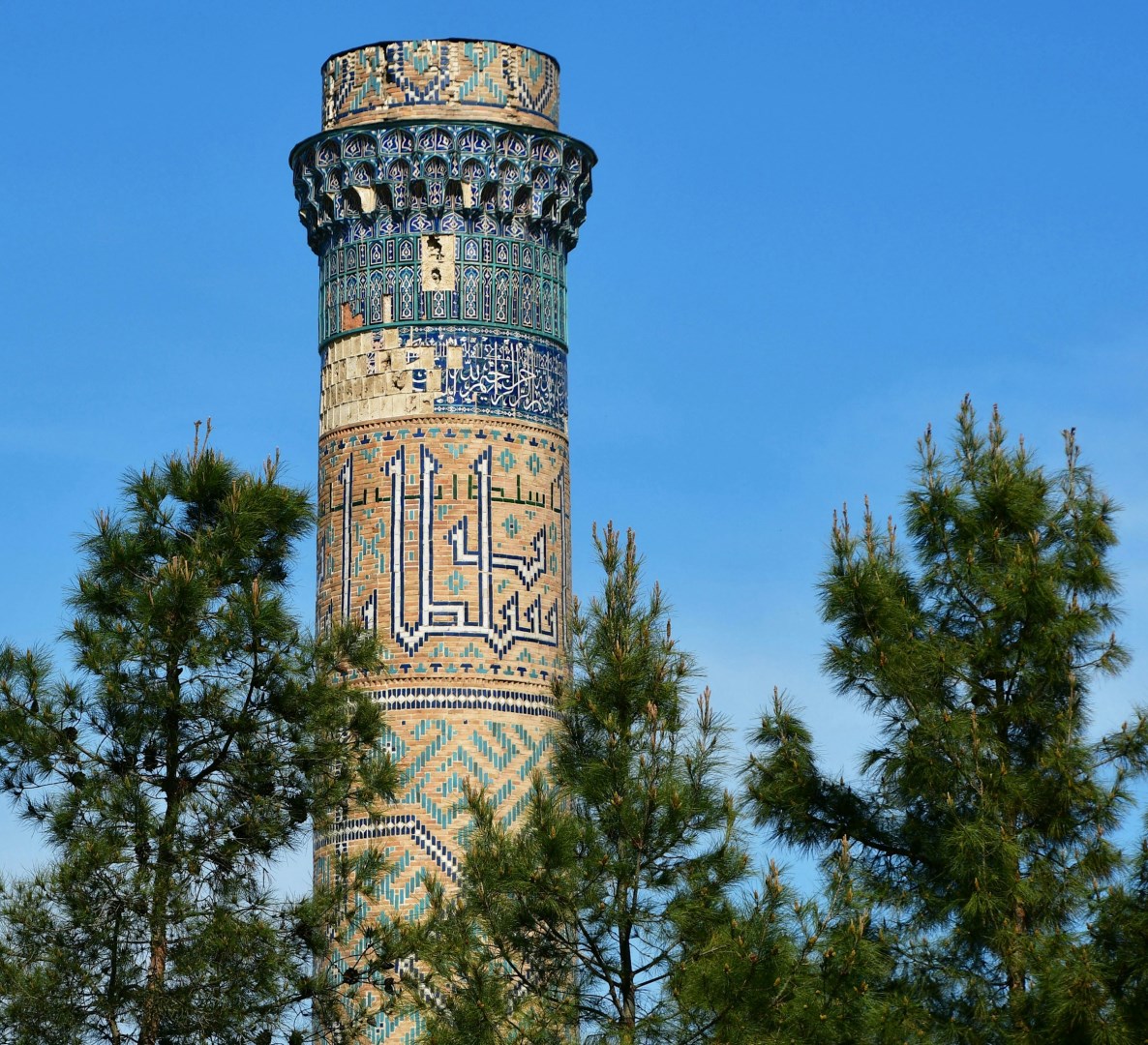
The Gur-e-Amir mausoleum is one of Samarkand’s most important Timurid monuments and the burial place of Timur, known in the West as Tamerlane. The complex is distinguished by its large ribbed blue dome, monumental entrance, and richly decorated interior, while its surviving minaret is an important part of the original architectural ensemble. The minaret is faced with patterned glazed tiles and rises beside the entrance area, contributing to the vertical composition of the mausoleum. Inside Gur-e-Amir, elaborate blue and gold decoration surrounds the cenotaphs of Timur and members of his family, including Ulugh Beg. The mausoleum forms part of Samarkand’s UNESCO World Heritage property and influenced later Timurid architecture.